
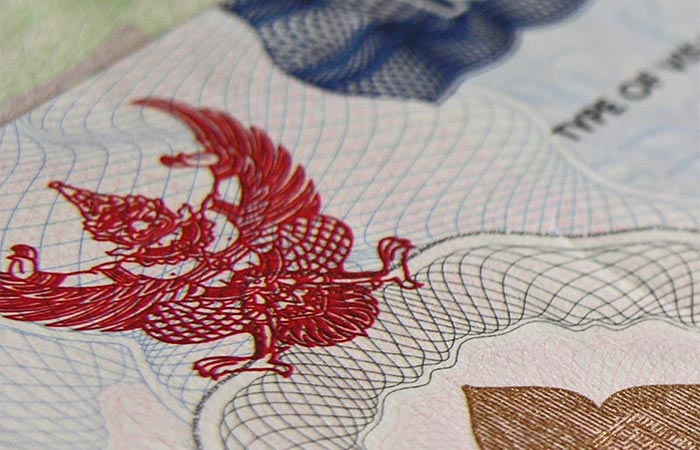
Destination Thailand Visa (DTV) — Thailand’s Newest Long-Term Visa
DTV is one of the Thailand’s newest long-term visa options, introduced in 2024 with the aim of attracting digital nomads, remote workers, freelancers, cultural visitors, and other long-stay travellers to the Kingdom. With flexible terms, multiple entries, and family-friendly eligibility, the DTV offers a compelling option for those who want to spend extended time in Thailand.
What is DTV?
The DTV is essentially a ‘special long-term tourist-type visa’ that allows eligible foreigners to stay in Thailand for extended periods without the need for multiple short-term tourist visas. It is tailored especially for individuals who work remotely or intend to engage in ‘soft power’ activities while residing in Thailand.
Unlike visas tied to work permits or long-term residency, the DTV does not grant a Thai work permit — meaning it cannot be used for employment with a Thai company. However, you can work remotely for clients or employers outside Thailand on this visa.
What are key features of the DTV?
Validity: 5 years
Number of Entry: Multiple (You may leave and re-enter Thailand as many times as you wish while the visa is valid).
Stay per Entry: Up to 180 days, which can be extended once for an additional 180 days during each stay (additional fee applies).
Work Rights: Allow for remote work for clients or companies outside Thailand.
Family Inclusion: Dependents, such as spouses and children under 20 years old, can be included under the main applicant’s visa.
Who the DTV are designed for?
1. Digital Nomads, Remote Workers, and Business Owners with Foreign Clients
This includes online freelancers, entrepreneurs, and similar professionals who earn income from outside Thailand, such as software developers, data analyst, graphic designers. The DTV permits the holder to reside in Thailand for an extended duration while maintaining employment with a foreign employer.
For those who are foreign entrepreneurs, the DTV lets you run your own business while residing in Thailand as long as your clients and contracts are outside Thailand i.e., keeping your invoicing and contracts abroad.
Note: The DTV does not permit you to invoice Thai clients or sign employment contract with Thai employer in Thailand.
2. Participants in Cultural, Soft Power, and Medical Activities
The DTV also supports long-term participation in structured Thai “soft power” programs — including Muay Thai training, Thai culinary training, medical treatment, or other cultural engagements — provided these activities are for a significant duration.
Who Is Eligible?
To qualify for the DTV, applicants generally must:
- be at least 20 years old
- have no serious immigration violations or overstay history with Thai authorities.
- have no serious criminal convictions that would pose a security risk to Thailand.
- show proof of at least 500,000 THB (or an equivalent amount in foreign currency) in liquid assets or have a sponsor/guarantor willing to support the applicant financially. Note: Embassies now consistently enforce the 500,000 THB requirement and often require proof that the balance was maintained for at least 3 months before application.Financial proof must be demonstrated at the time of application and again when applying for in-country extensions.Cryptocurrencies and similar digital assets are not accepted as proof of funds.
- provide necessary documentation about employment, proof of remote work, or enrollment in qualifying cultural programs.
For dependents (spouses and children under 20 years old), they must meet defined familial relationship criteria. This means:
- You must be a legal spouse of the DTV holder; OR
- You must be a legally recognized dependent child of the DTV holder, younger than 20 years old, and unmarried.
What are the required documents in 2026?
For, workcation (Digital nomad/remote worker/foreign talent/freelancer)
- Passport Biodata Page or Travel Document (Must be valid within 6 months from travel date)
- Photograph of the applicant (Must be taken within the past 6 months)
- Document indicating current location (driving license, bank statement, or proof of stay such as a residence permit or visa stamp)
- A copy of a recent saving or checking bank statement with an ending balance of no less than 500,000 THB or (approximately $16,000 USD subject to exchange rate) that shows the applicant’s name and date. In case of submitting a family bank statement, proof of relationship (i.e. birth certificate, marriage certificate, sponsorship letter) must be provided.
- Proof of the DTV fee payment (approximately 10,000 THB, subject to variation by embassy or consulate including exchange rates).
- For employees and freelancers
Employment contract or employment certificate showing your remote work status and salary in your country or professional portfolio showcasing digital nomad, remote worker, foreign talent, or freelancer status. Recent pay slip, personal tax return, recent invoices or service contracts are optional but recommended.For business entrepreneurs
The documents include Certificate of Incorporation or Business License, corporate tax return, and Cover Letter outlining business activities, revenue model, and remote operations.
For, Thai soft power related activities e.g. Muaythai, Thai culinary training and medical treatment
- Passport Biodata Page or Travel Document (Must be valid within 6 months from travel date)
- Photograph of the applicant (Must be taken within the past 6 months)
- Document indicating current location (driving license, bank statement, or proof of stay such as a residence permit or visa stamp)
- A copy of a recent saving or checking bank statement with an ending balance of no less than 500,000 THB or (approximately $16,000 USD subject to exchange rate) that shows the applicant’s name and date. In case of submitting a family bank statement, proof of relationship (i.e. birth certificate, marriage certificate, sponsorship letter) must be provided.
- Proof of the DTV fee payment (approximately 10,000 THB, subject to variation by embassy or consulate including exchange rates).
- Letter of acceptance from institute or company organizing activities, letter of appointment from hospital/medical center in Thailand.
- Business registration or operating license of the host institution, demonstrating that the entity is legally registered.
- Proof of the activity duration (generally expected to last at least six months).
For, spouse and children under 20 years old of DTV visa holders
- Passport Biodata Page or Travel Document (Must be valid within 6 months from travel date)
- Photograph of the applicant (Must be taken within the past 6 months)
- Document indicating current location (driving license, bank statement, or proof of stay such as a residence permit or visa stamp)
- A copy of a recent saving or checking bank statement with an ending balance of no less than 500,000 THB or (approximately $16,000 USD subject to exchange rate) that shows the applicant’s name and date. In case of submitting a family bank statement, proof of relationship (i.e. birth certificate, marriage certificate, sponsorship letter, certificate of adoption) must be provided
- Proof of the DTV fee payment (approximately 10,000 THB, subject to variation by embassy or consulate including exchange rates).
- Personal details of a DTV visa holder (i.e. valid government-issued ID card, Passport biodata page and the DTV visa approval of the DTV visa holder)
NOTE: There are no set standards or requirements for how these documents need to be prepared or presented. Acceptance is solely at the discretion of the Thai embassy officers.
This is why it is recommended to have our DTV visa consultants review your application packet. We’ve handled many successful applications for a wide variety of applicants, so we know what Thai authorities are looking for when reviewing documentation for approval.
DTV Proof of Fund Guide in 2026
Applicants must show at least 500,000 THB (or an equivalent amount in foreign currency) held as liquid funds or have a sponsor/guarantor willing to support the applicant financially. This means that you or your guarantor do not need to hold Thai baht; foreign currencies such as USD, EUR, or RMB are accepted if they meet the equivalent threshold on the date of the bank statement.
Embassies now consistently enforce the 500,000 THB requirement and often require proof that the balance was maintained for at least 3 to 6 months before application. Some require statements issued within 7–30 days of submission. Due to the variation of requirements from each embassy,, we can assist you in reviewing financial documents against the specific mission’s practice before filing.
Accepted funds generally include savings accounts, checking accounts, and fixed deposits.
Assets that are commonly rejected include cryptocurrencies or similar digital assets holdings, stock or investment portfolios, and credit limits.
Financial proof must be demonstrated at the time of application and again when applying for in-country extensions.
Why applying with Skyinterlegal?
Applicants may choose to file their applications independently via the Thai e-Visa system. Nevertheless, the DTV denials frequently stem from inadequate or improperly presented financial documentation, ambiguous proof of employment or freelance work, selection of providers that do not meet soft-power criteria, or noncompliance with specific formatting requirements imposed by individual embassies.
Skyinterlegal can help minimize potential risks of rejection by conducting a prior eligibility assessment, confirming the specific requirements of the relevant embassy, reviewing supporting documents, and organizing applications in accordance with the evaluation standards typically applied by consular officers in DTV cases.
We will assist you with:
– reviewing your eligibility with the right visa for you
– recommend the most suitable visa category for you
– identifying potential risks and correcting them prior to visa submission
– preparing relevant documents aligned with the expectation by embassies and consulars
– assist with clarifying your financial presentation to support your purpose of stay and dependents
How to Apply for a DTV?
1. Gather required documentation (passport, passport photo, proof of funds, proof of remote work or program enrolment, etc.).
2. Submit your application
3. Pay the visa fee (often around 10,000 THB though this can vary by location and exchange rates).
4. Await approval — processing times vary by embassy but often range from a few days to a few weeks.
Note: You must apply for the DTV from outside Thailand — either in person at a Royal Thai Embassy or Consulate abroad, or via Thailand’s official e-Visa portal where supported by that embassy. If applying through a local embassy, some countries may have specific requirements or require bookings by appointment. We can assist you throughout the process.
If the DTV isn’t quite what you’re looking for, Thailand offers several alternative long-stay visa options. Feel free to reach out to us to discuss on DTV application or other types of visa.
FAQ Highlights on DTV
Is the DTV the same as the Thai Digital Nomad Visa?
Yes, its official legal name is Destination Thailand Visa. However, it is commonly referred to as the Thailand Digital Nomad visa since the DTV is designed specifically for remote professionals.
Can I work in Thailand on a DTV?
No, the DTV does not grant a Thai work permit and therefore does not legally allow employment in Thailand itself. However, remote work for clients or companies outside Thailand is acceptable. In case you want to work in Thailand or invoice Thai clients, other types of visa is applicable.
Does remote work under DTV require a Thai work permit?
No, the DTV explicitly permits remote work for employers or clients outside Thailand.
Does DTV requires health insurance?
Not mandatory, but it is highly recommended to safeguard against medical expenses during your stay.
If I am currently residing in Thailand, can I apply for DTV?
No, the application must be submitted outside Thailand. Nevertheless, the documents can be prepared while residing in Thailand.
Can the DTV be extended?
Yes, each 180-day stay can be extended once at a Thai Immigration office, for an additional fee.
Can I open a Thai bank account with a DTV?
DTV holders can’t open a Thai bank account due to strict KYC and anti-money laundering regulations. Although you may previous hold a Thai bank account, it will ultimately be closed. You may consider long term visas that allow for Thai banks access, such as Thailand Privilege visa, Long-Term Residence visa, Retirement visa, Marriage visa, and work-related non-immigrant visa.
Do I need to pay tax on my income?
If you stay more than 180 days cumulative in any calendar year in Thailand, then you are considered as a Thai tax resident, regardless of your visa status. This means any money you remit, or bring into the country, is assessable for income tax.
Nevertheless, you may be exempt from this if your foreign income is taxed by your home country, and that country has a Double Tax Agreement with Thailand, which prevents income from being taxed twice.
How much does the Destination Thailand Visa cost?
The DTV costs approximately 10,000 THB. This may subject to variation of exchange rate and different charge on each embassy or consulate.
For extending visa per entry, each extension costing an additional 1,900 THB.
Can I satisfy the financial requirement or proof of funds with Cryptocurrency?
No, the Embassies require proof of liquid assets, meaning cash held in a savings or current account that is immediately withdrawable. Cryptocurrency, stocks, and other investment portfolios are not accepted. Business account under their name is also not accepted.
How long must the 500,000 THB stay in my account to apply for the DTV?
According to general rule, applicants must submit bank statements showing a consistent balance of at least 500,000 THB for a minimum of three months before applying.
Do I need to keep the 500,000 THB in my account for the full 5 years?
Not necessarily. Applicants are only required to show the funds at the time of their initial application and again when applying for a 180-day extension. For the extension, an updated bank statement showing a balance of at least 500,000 THB must be provided.
Can freelancers with no corporate employer qualify under the DTV?
Yes, the DTV is designed specifically for remote workers including freelancers. Freelancers may qualify under the “Workation” category by submitting a professional portfolio demonstrating ongoing work, such as client contracts, a professional website, or recent invoices.
What are activities under Thai Soft Power?
Soft power activities are those that promote Thai culture, heritage, and traditions. These include engaging in Muay Thai courses, Thai cooking classes, sport trainings, seminars, wellness programs, medical treatment, traditional arts, music festivals, and other cultural or educational endeavors in Thailand
Is the DTV Visa a multiple entry visa?
Yes, you can exit and re-enter Thailand as needed during the validity of the visa.
Can I work for a Thai company on a DTV?
No, your employer must either be yourself or a foreign company.
Can I apply for a Thai work permit under a DTV Visa Thailand?
No, the DTV does not permit holders to work in Thailand. It is strictly for remote workers, freelancers, or those engaging in Thai Soft Power activities. To legally work in Thailand, you would need a work permit under a Non-Immigrant B Visa.
What if my remote job ends or I change employers?
While the DTV is still valid (5 years period), holder can enter the Kingdom as a tourist holding the DTV. Nevertheless, an immigration officer may request evidence of a ‘workcation’ which could raise concerns if you are unable to provide. Accordingly, it is advisable to enroll in one of the qualifying Soft Power activities—such as Muay Thai training or a cooking course—to ensure compliance with your current visa status.
Can I set up a business in Thailand while on this visa?
No, although you cannot become an authorized director or engage in day-to-day business operations for Thai companies, you are allow to act as a shareholder. Further business activities engagement may require an appropriate Thai work permit and business visa.
Can I study on a Destination Thailand Visa?
No, DTV does not allow enrollment in a full-time degree program, such as at a university. Nevertheless, holders may participate in short-term courses in the “Soft Power” activities, such as Muay Thai training and a Thai cooking course.
How long is the processing time for the DTV Visa Thailand?
Processing typically takes between two and four weeks after submission of the required documents through the Thai e-Visa portal.
What additional documents might be needed for my DTV application?
In addition to standard requirements, additional documents may include:
- Proof of current location
- Proof of enrollment in Thai Soft Power activities
- Portfolio or professional references
- Bank statements or proof of sufficient funds
Note: If the applicant not submitting all listed documents or submitted a screenshot or unclear file, he/she will get a request for more documents which will delay the Visa processing time. Furthermore, each embassy has sole discretion to request additional documentation, such as extended financial histories (from three to six months) or specific evidence of employment or professional activity. Feel free to reach out to us, our DTV visa consultants can assist in reviewing your application documents.
Does DTV require the 90-Day Reporting?
Yes, if staying continuously for more than 90 consecutive days. This is to confirm your current place of residence.
Can I switch from a DTV to another visa inside Thailand?
Generally, no. If you wish to change to another visa category, such as a marriage or business visa, you are typically required to leave Thailand and submit a new application from abroad.
If I enter on a DTV and the date of reside approaches to 180 days, then leave Thailand, is there a minimum time I must stay outside before returning?
No, the DTV does not impose a mandatory “cooling off” period. As a valid five-year multiple-entry visa holder, you may leave and re-enter Thailand immediately, with each re-entry granting a new 180-day stay.
Can I get a Thai Driving License with a DTV?
Yes, you need to have a long-term rental agreement and use that to obtain a “residence certificate” from the immigration, then use it with a medical certificate to obtain a driving license. However, it may be difficult in practice as the DTV is classified as a tourist visa. Some immigration offices may be reluctant to issue the required certificate of residence.
Can I bring my family with me?
Yes, you are allowed to bring your legal spouse and unmarried children under the age of 20 years old as ‘DTV Dependents’. Nevertheless, each dependent must apply separately for a DTV Dependent visa and can only apply once the main applicant’s visa has been granted.
Why choose DTV?
- Long-Term Stay: Flexible stay in Thailand for up to 5 years, without frequent renewals.
- Multiple Entries: Allow easy travel in and out of Thailand during the visa’s validity.
- Remote Work and Freelance Opportunities: Catered to digital nomads, remote workers, and freelancers.
- Cultural Immersion: Supports participations in Thai Soft Power activities, such as Muay Thai, wellness programs, and culinary arts.
- Simplified Process: Online applications are available for eligible nationalities.
- Family-friendly option: Spouses and children can be included under the primary applicant’s visa for long stays together.
The DTV is one of the most cost-effective long-term stay options in Thailand, striking a balance between flexibility and duration for those who want to live, work remotely, or immerse themselves in Thai culture for years.
What are the common reasons for a DTV application being denied?
– Insufficient Funds: Using crypto or investment assets instead of liquid cash.
– Incorrect application location: Applying from within Thailand rather than from abroad.
– Lack of supporting documentation: Freelancers failing to demonstrate active work through contracts, invoices, or similar evidence.
Are there any alternatives to the DTV?
Yes, in the similar category, Thailand offers the LTR Visa (Long Term Resident Visa) for high-income earners (approximately USD 80k+) seeking tax benefits and the Thailand Privilege Visa for a long-term stay (5-20 years) with VIP perks and a streamlined application process.
For more inquiries, please feel free to contact us:
Sky International Legal Co., Ltd.
725 S Metro Building, 20th Floor, Room 174, Sukhumvit Road, Khlong Tan Nuea Subdistrict, Vadhana District, Bangkok 10110.
See map (click here)
Tel. 081-9151522, 090-0700080
Email: skyinterlegal@gmail.com