
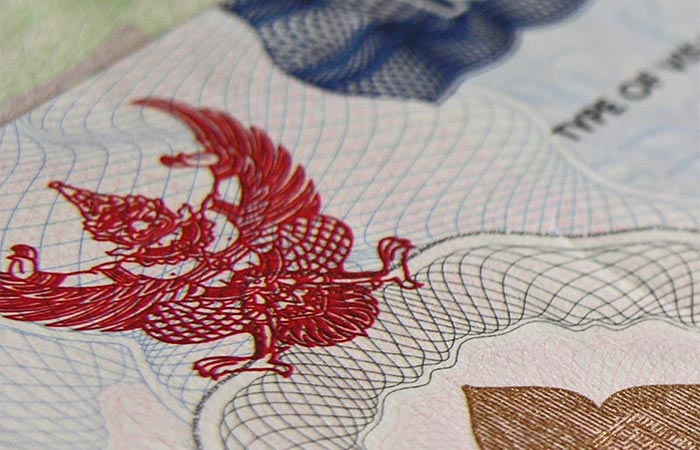
Thailand’s Long-Term Resident Visa (LTR Visa Thailand)
Live, Work, and Retire in Thailand with Exclusive Privileges
What is the Long-Term Resident Visa Thailand (LTR Visa)?
The Long-Term Resident Visa Thailand (LTR Visa) is Thailand’s special visa program designed to attract high-potential individuals — wealthy global citizens, retirees, highly-skilled professionals, and remote workers. It provides long-term stay rights, work permit privileges, and tax/investment benefits that make relocating to Thailand easier and more rewarding.
Why choose the LTR Visa?
The LTR Visa is a flagship initiative by the Thai government and the Board of Investment (BOI). It offers up to 10 years of residence (in renewable periods), work authorization, and family inclusion, making it one of the most attractive long-stay visas in the region.
What are the key benefits of the LTR Visa?
- Long-Term Stay: Up to 10 years residence (renewable 5 years + 5 years).
- Number of Entry: Multiple (You may leave and re-enter Thailand as many times as you wish while this visa is valid)
- Work Authorization: Permission to work in Thailand via a Digital Work Permit, with exemption from the standard 4:1 Thai-to-foreigner employment ratio requirement (No 4:1 hiring ratio). Fast-track work permit application for eligible professionals.
- Tax & Investment Incentives: Access to certain tax benefits and investment privileges. A flat 17% Personal Income Tax (PIT) rate for Highly-skilled professionals (vs. the standard progressive rate of up to 35%).
- Family Inclusion: Dependents (spouse and children under 20 years old) can be included.
- Fast-Track Immigration: Access to immigration fast-track services at international airports.
- Relaxed Reporting: Report to immigration once per year (instead of every 90 days).
Who the LTR Visa are designed for?
Applicants must qualify under one of the official LTR categories:
- Wealthy Global Citizen
Holders of high-value assets (e.g., minimum net worth of USD 1 million) and eligible investments in Thailand (such as real estate or government bonds). This path is ideal for those seeking a second home or a strategic base in Asia. - Wealthy Pensioner
Retired individuals aged 50 years and over with a stable annual pension or passive income (e.g., minimum USD 80,000 per year, or combination of income and investments). - Work-from-Thailand Professional
Remote workers employed by overseas companies who wish to live in Thailand while working online, with proof of employment and sufficient income. - Highly-Skilled Professional / Expert
Specialists/experts hired by Thai businesses in targeted industries such as technology, healthcare, infrastructure, creative industries, or government agencies.
*Requirements are varied by category. Our team provides a free assessment to determine the most suitable path for you.*
What are the required documents for LTR Visa application in 2026?
While requirements vary by each LTR Visa category, common documents include:
- A copy of your current passport, which will be used for the LTR Visa stamp with no less than 6 months of validity remaining and at least 2 blank pages for LTR Visa and stay permit stamps.
- Recent passport-size photographs on white backgrounds with formal/business attire. Photo must be taken within 6 months.
- Thailand Digital Arrival Card (TDAC), for those who entered Thailand after May 1st, 2025, or T.M.6 Card for those who entered Thailand before July 1st, 2022, or those who entered through a land border checkpoint and were issued T.M.6 card
- Financial documents (bank statements, proof of assets, investment evidence, or pension proof).
- Health insurance policy (with required coverage) or proof of deposits.
- Police clearance and medical certificate.
- Employment contract (for remote workers/professionals).
At Skyinterlegal, we provide document review and preparation to ensure compliance specially to each LTR category, including BOI and consulate requirements.
How to bring your family under LTR Visa?
Holders of the LTR Visa may include their legally recognized spouse and dependent children under the same LTR Visa category as the principal applicant.
Approved dependents are granted the same visa validity period as the primary LTR holder, allowing them to reside in Thailand for up to 10 years, subject to compliance with applicable conditions
In 2026, Thailand has updated the LTR dependent framework to reflect recent legal and policy changes. This includes:
- Marriage equality recognized: Legally registered same-sex spouses are eligible to apply as LTR dependents (effective January 23, 2025)
- Removal of dependent cap: no fixed numerical limit on eligible dependents under one LTR holder
What is included in our service?
- Free Initial Assessment – Evaluate eligibility and recommend the right LTR category.
- Document Preparation – Collect, review, and format all relevant documents, including financial, employment, and insurance documents.
Note: Digital files are accepted (PDF format preferred). Documents can be in English or Thai. Certified translations are required only if the documents are in another language. Financial documents should be recent (typically 3–6 months).
- BOI Endorsement – Apply for qualification approval with the BOI.
Note: Once BOI endorsement has been issued, it is valid for 60 days.
- Visa Submission – File the LTR Visa application at the Thai Embassy/Consulate or via the e-Visa platform.
- Work Permit & Post-Visa Services – Assist with work permit issuance, address registration, tax planning, and dependent applications.
Fees
1. Government Visa Fee:
- LTR Visa: 50,000 THB per person
- Dependent visa: 50,000 THB each
- Digital work permit: 3,000 THB
2. Supporting Costs:
- Health insurance: USD 300–800 per year (may not be required if the applicant already holds qualifying coverage or maintains an eligible deposit).
- Translation: 5,000–15,000 THB
- Notarization/apostille: 50–150 USD
- Thai investment (if applicable): 250K–500K USD
3. Service Fees:
- Quotation provided after initial assessment.
What is the processing time?
Processing time varies depending on category, required endorsements, and your supporting documents. Typically, it may take 4–8 weeks for BOI qualification and visa approval. Work permits are often issued within 3–5 business days after visa approval.
What are the common obstacles?
- Incomplete employer financials
- Asset valuation disputes
- Translation errors
- Health insurance gaps
Why choose us?
- We have experienced teams specializing in LTR Visa, Work Permits, and BOI coordination.
- We do provide an end-to-end assistance, which minimizes delays and rejection risks.
- We do provide additional services, including tax consultation, banking assistance, and family relocation support.

FAQ Highlights on LTR Visa
Does the LTR Visa ‘automatically’ allow me to work in Thailand?
Not automatically. A work permit must be applied for, but the process is streamlined for LTR holders.
Does the LTR Visa allow me to work in Thailand?
Yes, but you need a work permit. The advantage of the LTR program is that work permits are issued through the Board of Investment (BOI), making the process faster, simpler, and more secure compared to standard non-immigrant visas.
Can my dependents work in Thailand under the LTR Visa Thailand?
Yes, but not automatically. Dependants of LTR Visa Thailand holders may work in Thailand after obtaining their own work permits.
Are same-sex spouses recognized as dependents?
Yes. Since 2025, Thailand has recognized same-sex spouses under the LTR Visa Thailand programs, provided the relationship is legally registered and supporting documentation is submitted for the Long-Term Resident Visa Thailand.
Can I apply for the LTR Visa while in Thailand?
Yes, eligible applicants may apply either from within Thailand or from overseas. If you are already in Thailand, the application process is handled through the Thailand Board of Investment (BOI), and the LTR Visa Thailand can be issued after approval without requiring you to leave the country, provided your current stay status allows it.
How long is the LTR Visa valid?
Up to 10 years (multiple entry). It is granted in two periods of 5 years each, with a renewal after the first 5 years. During this time, you may leave and re-enter Thailand freely with multiple-entry rights.
How long does the LTR Visa application process take?
On average, the process takes approximately 4-8 weeks from submission of a complete application. Processing time for the Long-Term Resident Visa Thailand may vary depending on the category and whether the BOI requests additional clarification.
Is the LTR Visa multiple-entry?
Yes, the LTR Visa is a multiple-entry visa that allows holders to leave and re-enter Thailand freely through the validity period without any additional re-entry permits.
Can my family join me under the LTR Visa Thailand?
Yes, dependents (spouse and children under 20 years old) can be included under certain conditions. Dependents will receive long-term stay rights aligned with the main applicant. This makes the LTR Visa an excellent option for families relocating to Thailand.
Are there tax advantages?
Yes, certain LTR visa categories may enjoy personal income tax reductions or investment privileges. Details depend on your situation.
Do I need health insurance for the LTR Visa?
Yes, applicants must hold valid health insurance with minimum coverage set by BOI regulations (at least 50,000 USD), or show a minimum balance of 100,000 USD in an existing savings or current account as financial security. This ensures you are financially protected during your stay.
Is an employment contract required?
Yes, for professionals applying under employment-based LTR Visa Thailand categories.
It is to note that the employment contact must meet minimum income thresholds and comply with BOI criteria for the Long-Term Resident visa Thailand.
Can I use social security or pension income to qualify?
Yes, for applicants under the Wealthy Pensioner category of the Long-Term Resident visa Thailand, social security payments and pension income may be counted towards qualifying income.
Can I buy property or invest in Thailand with an LTR Visa?
Yes, LTR Visa holders can invest in Thai property, government bonds, or qualified businesses. Some LTR categories require this as part of the eligibility criteria.
It is to note that the Long-Term Resident Visa Thailand itself does not override property ownership restrictions. This means that the LTR Visa holders must follow existing Thai laws on foreign ownership when purchasing a property, including condominium ownerships within permitted foreign quotas.
What happens if I don’t meet the LTR requirements?
If you do not meet the LTR criteria, you may still be eligible for other visa options such as the Elite Visa, Retirement Visa (O-A/O-X), Business Visa, or Digital Nomad Visa (DTV). Skyinterlegal will guide you to the best alternative based on your goals.
How often do I need to report to immigration?
Long-Term Resident Visa Thailand holders are required to report to immigration once per year, replacing the standard 90-day reporting requirement applied to most other long-term visas.
How is the LTR Visa different from the Thailand Privilege Visa/ Thailand Elite Visa?
The LTR Visa is designed for qualified professionals and investors and includes legal work authorization and tax incentives, but it comes with higher eligibility and documentation requirements.
The Thailand Privilege Visa/ Thailand Elite Visa is a premium, membership-based residence program with significantly lower eligibility criteria, focused on long-term stay, lifestyle privileges, and concierge services. It provides residence rights only and does not include work authorization.
What if my application is rejected?
If an application is rejected, the BOI typically provides reasons for the decision. This means applicants may reapply for the LTR Visa after addressing those issues. We can assist in reviewing the rejection and advising on corrective steps.
Why should I use a certified agency instead of applying myself?
While it is possible to apply directly, the LTR Visa involves strict financial, legal, and BOI documentation requirements. Many applications are delayed or rejected due to incomplete paperwork. With Skyinterlegal, you receive:
-
- Correct documentation preparation.
- Direct liaison with BOI and Immigration.
- End-to-end legal guidance and post-visa services.
This saves you time, reduces stress, and improves your chances of a successful application.
Where is the LTR Visa issued?
After approval, the LTR Visa Thailand can be issued at the Thailand Investment and Expat Services Center (TIESC) in Bangkok or opt to apply for an e-visa from a Royal Thai Embassy or Consulate abroad, depending on the applicant’s location and preference for the Long-Term Resident Visa Thailand.
For more inquiries, please feel free to contact us:
Sky International Legal Co., Ltd.
725 S Metro Building, 20th Floor, Room 174, Sukhumvit Road, Khlong Tan Nuea Subdistrict, Vadhana District, Bangkok 10110.
See map (click here)
Tel. 081-9151522, 090-0700080
Email: skyinterlegal@gmail.com