
Property Insurance Claims in Thailand: Evidence to Preserve After Fire, Flood or Theft
Property claim evidence in Thailand should help establish what happened, which assets were affected and what loss the records support. After fire, flood or theft, the condition of a business premises may change quickly as emergency work and recovery begin.
For factories, hotels, warehouses and shops, photographs are only one part of the evidence. Purchase documents, stock records, maintenance history and witness accounts can help connect the reported damage to specific property.
Sky International Legal Co., Ltd. assists businesses with lawful fact-finding and evidence review. Our Insurance Claims Investigation in Thailand service can help identify gaps and organise findings for the client’s claims or legal team.
Put Safety First and Notify the Insurer Promptly
First, follow the directions of emergency services and relevant authorities. Evidence collection should take place only where access is safe and permitted.
Do not delay necessary emergency measures to take photographs. Where structural, electrical or other hazards are present, obtain appropriate professional assistance before accessing the affected area.
Meanwhile, notify the insurer or broker promptly. Provide the known facts, affected location and current situation, then request instructions about inspection and supporting documents.
Keep a record of the notification and subsequent communications. Also check the policy’s notice requirements and any relevant deadlines.
The required documents depend on the policy, property and circumstances. Coverage for fire, flood or theft should be checked against the actual wording and endorsements.
Preserve Evidence of the Property Before and After the Event
A useful claim file explains both the property’s earlier condition and the change discovered after the incident.
Pre-loss records may include:
- Dated photographs and previous inspection reports;
- Asset registers and equipment identification;
- Purchase, delivery and installation records;
- Stock counts and inventory movements; and
- Maintenance, servicing and repair history.
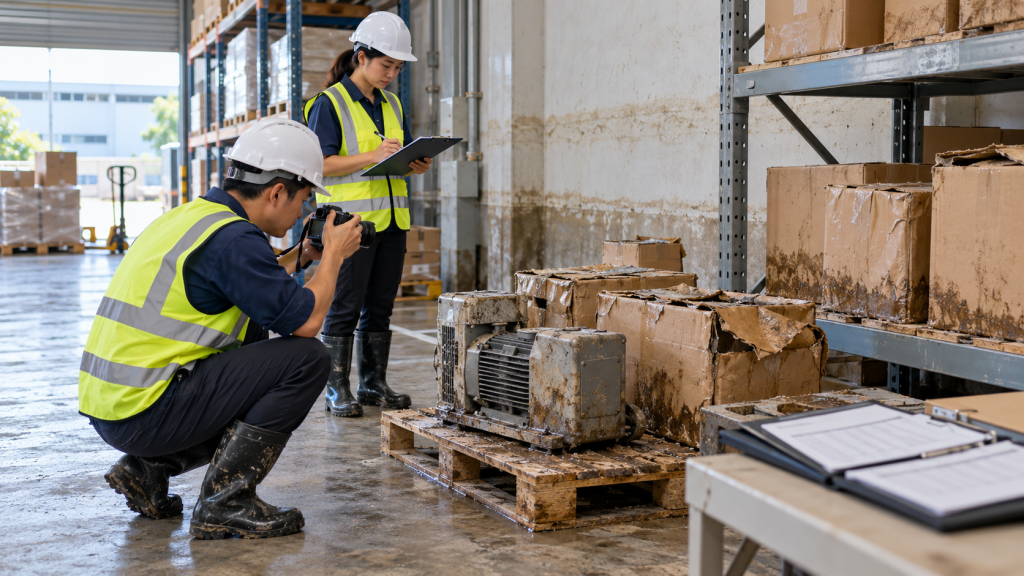
Next, document the condition after the event. Link photographs and observations to the same asset, room, shelf or storage area where possible.
For example, a serial number can connect a damaged machine to its purchase record. A warehouse location reference can help match affected stock with inventory records.
Clearly distinguish earlier damage, recent repairs and the condition attributed to the reported event. Where the connection remains uncertain, record the question for further examination.
Create an Itemised Property Loss Register
An itemised register helps connect each reported loss with supporting evidence.
| Register field | Information to record |
| Item or stock reference | Asset number, product code, model, serial number or batch |
| Location | Building, room, floor, shelf or storage area |
| Ownership or relevant relationship | Owned, leased or held for another party |
| Quantity and observed condition | Number affected and a factual description of damage or absence |
| Supporting records | Photograph references, purchase documents, stock records and reports |
| Proposed action and cost | Inspection, repair, replacement or disposal, with the relevant quotation |
First, give each entry a consistent reference. Use that reference in photographs, inspection notes and quotations.
Next, separate confirmed quantities from estimates. Explain how any estimate was prepared and what remains to be verified.
The register records the reported loss. Whether each item or interest is insured requires a separate policy review.
Gather Purchase Records, Stock Accounts and Maintenance History
Purchase documents help identify assets and their transaction history. However, the original purchase price may differ from the applicable insurance valuation basis.
Gather relevant invoices, receipts, delivery notes, lease agreements and asset registers. Where originals were lost, identify available copies and the source of each record.
For stock losses, compare the last reliable count with subsequent receipts, sales, transfers and returns. This helps assess what was present before the event.
In addition, retain maintenance records for affected machinery and building systems. They may help clarify prior condition, earlier faults and work performed.
Keep emergency expenditure and later permanent repairs clearly identified. Supporting records should explain what work was done, when and why.
Record Photographs, Video and Relevant Witness Information
Where safe, take views that show the affected area as a whole and closer images of individual items.
Useful details may include:
- The location and extent of visible damage;
- Identifying labels, models and serial numbers;
- Water marks, damaged surfaces or affected packaging;
- Doors, locks or other relevant security features; and
- The condition before and after emergency work.
Next, retain original files where available. Record who captured them, when and what they show.
Preserve relevant CCTV footage and access records through authorised channels before they become unavailable. Keep the context and note any known difference between system time and actual time.
Witness information may help establish when damage or missing property was discovered. Separate direct observations from assumptions or information received later.
Our Witness Location and Interview Support in Thailand service can assist with locating relevant people and seeking voluntary factual accounts.
Evidence to Prioritise After the Following Events
After a Fire
Preserve available incident logs, alarm records and reports from responding authorities. Where accessible, retain photographs showing affected areas and the condition of equipment or stock.
Also record damage observed after smoke exposure or firefighting measures. These observations should be linked to the relevant items and inspection findings.
The cause of a fire and technical extent of damage may require qualified specialists. Record observations without presenting an unverified cause as an established fact.
After a Flood or Water-Related Event
Document visible water levels, affected floors, storage areas and the position of equipment or stock where safe.
Next, record when water was first noticed, when access became possible and what recovery work followed. Relevant local reports may help support the chronology.
The source of water and its effect on structures or equipment may require specialist assessment. Different water-related events can raise different factual and policy questions.
After Suspected Theft
Report suspected theft to the police promptly and retain the relevant report. Provide known facts and distinguish them from matters still being checked.
Preserve available CCTV, access logs, security records and photographs of relevant entry points. Also identify when the property was last recorded as present and when its absence was discovered.
Reconcile missing stock against legitimate deliveries, transfers and returns. A stock shortage alone may not establish how the loss occurred.
A police report forms part of the claim evidence. The insured property, quantities, value and relevant policy terms still require review.
Document Conditions Before Repair or Disposal
Cleaning, repairs and disposal may change the evidence available for later review. Therefore, record the original condition first where safe and practical.
Contact the insurer or appointed surveyor about inspection arrangements before non-urgent permanent work. Keep the instructions and any agreed arrangements in the claim file.
Where urgent work is needed for safety or to prevent further damage, document the reason and measures taken. Retain available before-and-after photographs, work records and receipts.
If disposal is necessary, record the items, quantities, date, reason and contractor involved. Coordinate inspection or safe retention of relevant materials with the insurer and specialists where appropriate.
Evidence preservation should not require retaining hazardous property or delaying action required by the authorities.
Identify Questions for Engineers and Other Specialists
Photographs and business records may not resolve every technical or valuation issue.
| Specialist work | Questions it may help answer |
| Structural or engineering assessment | Is the building or equipment safe, what damage is present and what work is necessary? |
| Fire or other causation assessment | What evidence supports the possible cause and mechanism of damage? |
| Repair or valuation assessment | What repair or replacement scope and cost are supported? |
| Stock or financial analysis | What quantities and financial loss do the records substantiate? |
First, define the question the specialist should answer. Then identify the records and physical evidence needed for that assessment.
Skyinterlegal’s factual investigation can complement specialist work by reviewing chronology, documents and relevant accounts. Technical conclusions should come from appropriately qualified professionals.
Organise Your Property Claim Evidence in Thailand
Keep an indexed claim file with:
- The policy, schedule and relevant endorsements;
- Notifications and insurer correspondence;
- The incident chronology;
- The itemised loss register;
- Photographs, video and relevant system records;
- Purchase, stock and maintenance documents;
- Authority, security and inspection reports; and
- Repair, mitigation and disposal records.
Next, record which documents were submitted and when. Keep later corrections or additions clearly identified.
If evidence is missing, explain the gap and consider whether another reliable source can help. A transparent record is more useful than presenting an unsupported estimate as confirmed.
How Skyinterlegal Can Assist
We review the available property claim evidence in Thailand and identify the factual questions requiring further work.
An agreed assignment may include document comparison, chronology preparation, lawful site verification and voluntary witness inquiries. We can also identify questions requiring specialist input and assess relevant legal issues.
Where a dispute develops, our Litigation Support Investigation in Thailand service can connect the findings with broader case preparation.
We define the scope, deliverables, timing and fees before proceeding. Findings distinguish verified facts, reasonable inferences and unresolved issues.
A well-organised evidence file can assist claim assessment and discussions. It cannot guarantee coverage, payment or a particular dispute outcome.
Discuss Property Insurance Claim Evidence in Thailand
If your business has suffered fire, flood or suspected theft, tell us what happened and which facts require verification.
Please provide the affected location, incident date, current condition of the premises and approximate loss value. Also identify available records, planned inspections or repairs, and any known deadline.

Frequently Asked Questions
Once safety and emergency needs are addressed, record the affected location and observed damage. Notify the insurer promptly, preserve available photographs and prepare an item list. Then gather policy documents and records linking each item to the business.
Yes, where safe and practical. Wider views and close-ups can help show the original condition. However, evidence collection should not delay necessary emergency action or require entry into an unsafe area.
Check the insurer’s instructions and inspection arrangements first where practical. If disposal is necessary for safety or required by authorities, document the items, quantities and reason. Preserve available supporting evidence and coordinate with the relevant parties.
Identify available copies, supplier records, delivery documents, asset registers or other relevant material. Explain the source and limitations of those records. Their usefulness depends on what they establish and the insurer’s requirements.
No, the report is part of the evidence. The circumstances, identity of the missing property, quantities, value and policy terms still require assessment.
Photographs may support the factual record, but they may not resolve technical causation. Depending on the issue, a qualified engineer or other specialist may need to assess the physical evidence.
Our described service focuses on factual investigation and legal support. Engineering opinions, specialist causation assessments and formal valuations should be undertaken by appropriately qualified professionals within a defined scope.
Yes, subject to a conflict check, lawful purpose and an agreed assignment. The scope depends on the premises, affected property, available records and access requirements.
They depend on the locations, number of items, documents, urgency and access to evidence. Specialist requirements may also affect the work. After reviewing the initial information, we can propose deliverables, a timeframe and a fee arrangement.
For more inquiries, please feel free to contact us:
Sky International Legal Co., Ltd.
725 S Metro Building, 20th Floor, Room 174, Sukhumvit Road, Khlong Tan Nuea Subdistrict, Vadhana District, Bangkok 10110.
See map (click here)
Tel. 081-9151522, 090-0700080
Email: skyinterlegal@gmail.com