

International Debt Collection Thailand is an important issue for foreign companies that have unpaid invoices, commercial debts, loan claims, distributor disputes, service fee claims, or contractual payment problems involving debtors located in Thailand. For many foreign creditors, the challenge is not only that the debtor refuses to pay. The creditor may also face cross-border complications,
Tag Archives: debt recovery
Article
Asset Search After Judgment in Thailand: Why Creditors Need Asset Intelligence Before Enforcement
20
May
May
An Asset Search After Judgment Thailand service can be a critical step for creditors who have already won a debt case but have not yet recovered money from the debtor. In Thailand, obtaining a court judgment is not always the same as receiving payment. If the judgment debtor does not voluntarily comply, the creditor may

14
May
May
Commercial Debt Collection in Thailand: Legal Support for Foreign Creditors with Unpaid Invoices Thailand remains one of Southeast Asia’s most active commercial hubs, attracting foreign manufacturers, suppliers, logistics companies, technology firms, and international investors. But with increasing cross-border trade, it also comes a growing problem faced by many overseas businesses, unpaid invoices from Thai companies.

14
May
May
How to Recover Debt from a Thai Company When a foreign creditor needs to recover debt from a Thai company, the first step is not always to file a lawsuit immediately. A successful recovery strategy should begin with reviewing the debt documents, checking the company’s legal status, identifying directors and shareholders, assessing business activity, and
14
May
May
Debt Recovery Lawyer Thailand: Legal Support for Foreign Creditors When a foreign creditor faces an unpaid debt in Thailand, appointing a Debt Recovery Lawyer Thailand may become necessary if ordinary reminders, informal negotiations, or collection efforts are no longer effective. A debt recovery lawyer can help assess the legal strength of the claim, prepare formal
19
Mar
Mar
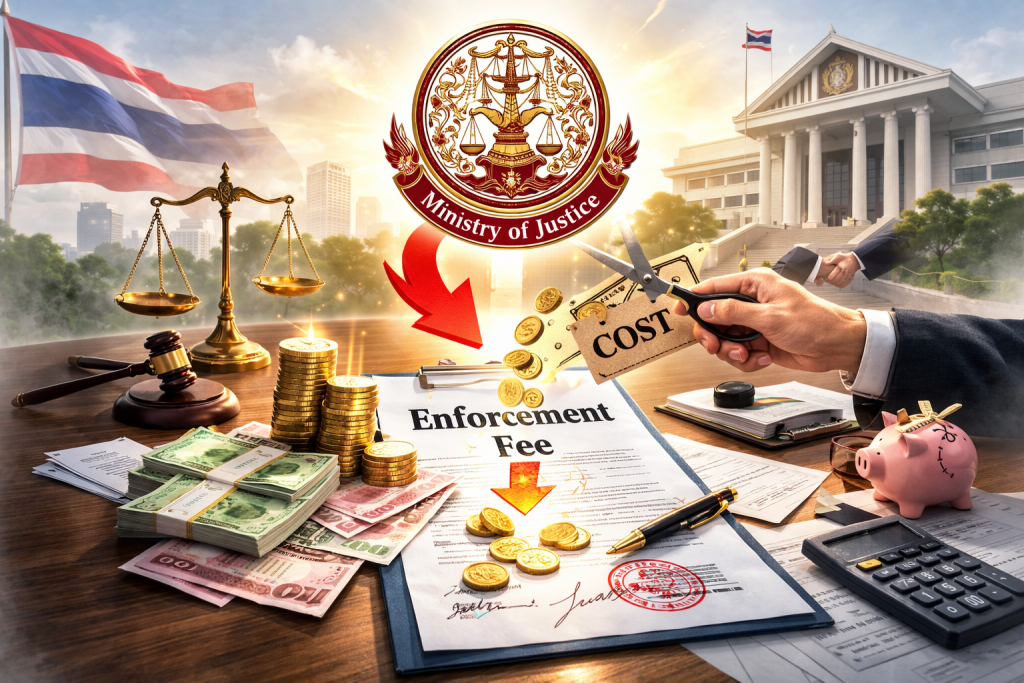
In 2025, Thailand has recently taken a significant step in reforming its debt enforcement framework by approving a reduction in enforcement-related fees. This policy—driven by the government and the Ministry of Justice—aims to alleviate financial pressure on debtors while promoting more efficient and accessible enforcement proceedings. The reform reflects a broader policy direction toward balancing